

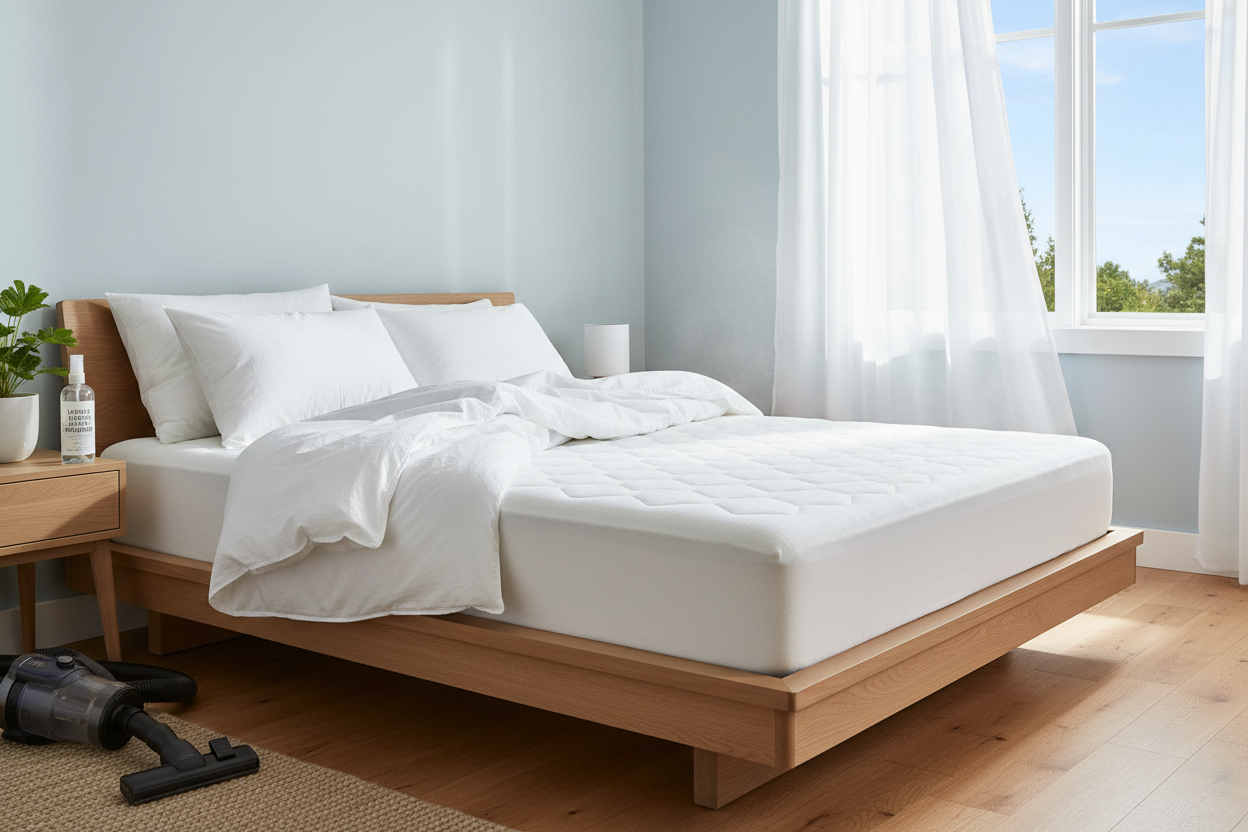
Your mattress plays a major role in your overall sleep health. Over time, sweat, skin cells, dust and allergens can build up beneath the surface — even if your bed looks clean. Knowing how to clean your mattress properly is essential for hygiene, comfort and long-term performance.
This guide explains how to keep your mattress clean without damaging its internal structure or materials.
Why Mattress Hygiene Matters
We spend roughly a third of our lives in bed. During sleep, the body naturally releases moisture and sheds skin cells, which can attract dust mites and bacteria if not managed correctly.
Poor mattress hygiene can contribute to:
- Allergies and asthma symptoms
- Skin irritation
- Unpleasant odours
- Reduced mattress lifespan
Regular, gentle cleaning helps maintain a healthier sleep environment.
What Not to Do When Cleaning a Mattress
Before covering what works, it’s important to understand what can cause damage.
Avoid:
- Steam cleaning
- Soaking the mattress with water
- Harsh chemical cleaners or bleach
- Excessive scrubbing
Moisture that penetrates deeply can damage internal materials and encourage mould growth.
Step 1: Use a Mattress Protector at All Times
A breathable mattress protector is the most effective hygiene tool.
It helps:
- Block sweat, spills and stains
- Reduce dust mite exposure
- Protect internal mattress layers
This is especially important for households with allergies, children or pets. Many sleepers pair protectors with mattresses from Chiropedic’s low-allergen range to support cleaner sleep.
Step 2: Vacuum the Mattress Regularly
Vacuuming removes surface dust, allergens and skin particles.
How to vacuum safely:
- Use a clean upholstery attachment
- Vacuum the entire surface, including seams
- Do this every 1–2 months
Vacuuming is gentle, effective and won’t compromise mattress materials.
Step 3: Spot-Clean Stains Immediately
Accidents happen. When they do, quick action matters.
Safe spot-cleaning method:
- Blot (do not rub) with a clean cloth
- Use a mild detergent mixed with water
- Apply minimal moisture
- Allow the area to fully air-dry
Never saturate the mattress or use heat to dry it.
Step 4: Control Moisture and Airflow
Moisture is the biggest threat to mattress hygiene.
To reduce moisture build-up:
- Air the mattress occasionally
- Keep the bedroom well ventilated
- Avoid making the bed immediately after waking
- Use breathable bedding materials
This is particularly important for sleepers who sweat or live in humid environments.
Step 5: Wash Bedding Weekly
Clean sheets and pillowcases reduce what reaches the mattress.
Best practice:
- Wash sheets weekly in warm to hot water
- Wash mattress protectors regularly
- Replace worn bedding that traps moisture
Clean bedding supports cleaner mattress surfaces.
Step 6: Avoid DIY Deodorisers That Cause Damage
Some online tips recommend baking soda or sprays. While light deodorising may help, excessive use can be abrasive or leave residue.
If odours persist:
- Focus on ventilation and airflow
- Check bedding hygiene
- Inspect the mattress protector
Persistent smells can indicate trapped moisture rather than surface dirt.
When to Consider Mattress Replacement
If a mattress remains musty, triggers allergies or shows signs of mould despite proper care, replacement may be necessary.
Exploring the Chiropedic mattress collection can help identify options designed for hygiene, airflow and long-term health.
Final Thoughts
Keeping your mattress clean doesn’t require aggressive cleaning — it requires consistency and the right approach. Gentle vacuuming, moisture control and protective barriers are far more effective than harsh treatments.
A clean mattress supports better breathing, deeper sleep and a healthier bedroom environment.
FAQ
Can I steam clean my mattress?
No. Steam cleaning introduces excessive moisture, which can damage internal materials and promote mould growth.
How often should I clean my mattress?
Vacuum your mattress every 1–2 months and spot-clean spills immediately. Regular bedding washing also supports hygiene.
What’s the safest way to remove stains?
Blot stains with a mild detergent and minimal water. Avoid soaking or scrubbing the mattress.
Do mattress protectors really help with hygiene?
Yes. Protectors act as a barrier against sweat, dust mites and spills, making mattress hygiene much easier to maintain.


