

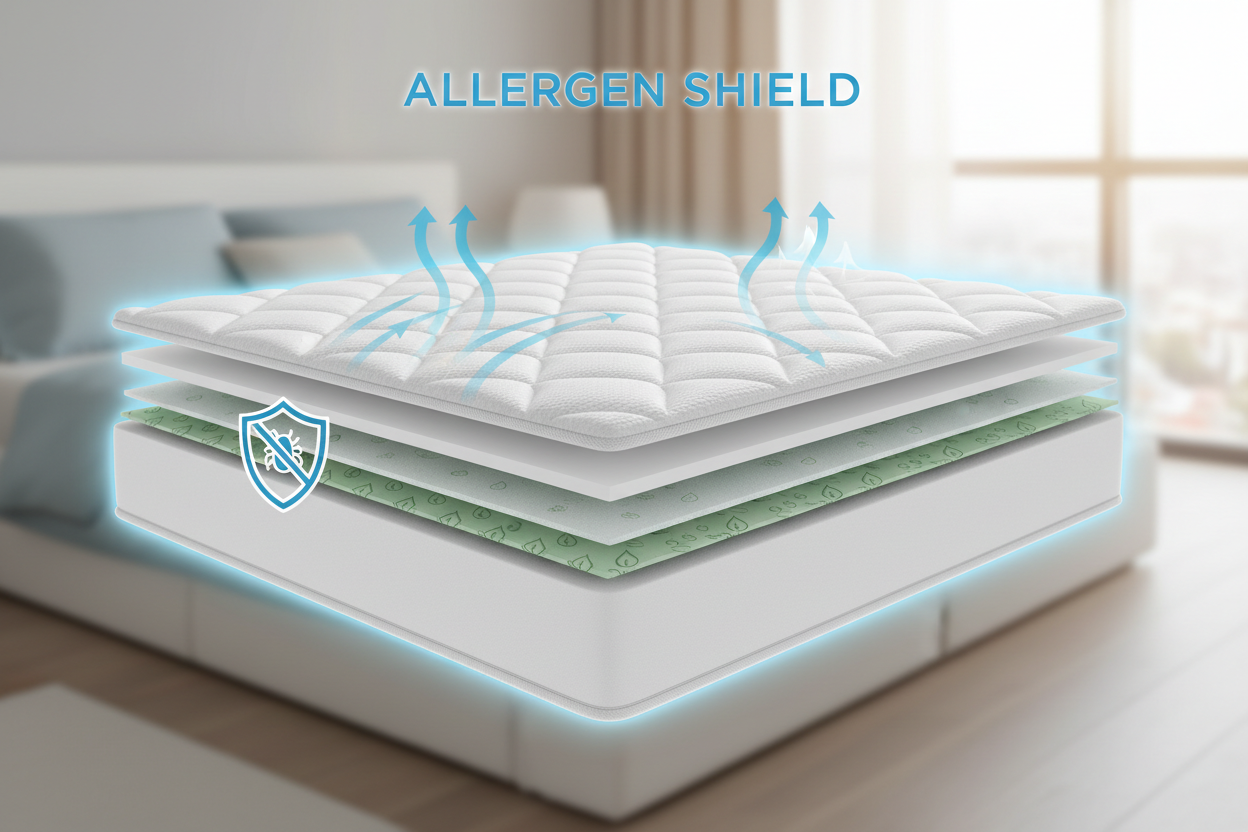
If you wake up congested, itchy, sneezing or short of breath, your mattress may be contributing more than you realise. For people with allergies, asthma or sensitive airways, the sleep environment plays a critical role in overnight comfort and long-term health.
This guide explains how to choose a mattress that supports cleaner, healthier sleep by reducing common allergens and irritants.
Why Mattresses Can Trigger Allergies
Mattresses can harbour dust mites, moisture, mould spores and bacteria — all of which can aggravate allergies and asthma. Because we spend around a third of our lives in bed, prolonged exposure can lead to ongoing symptoms and disrupted sleep.
Common mattress-related triggers include:
- Dust mites feeding on skin cells
- Trapped moisture encouraging mould growth
- Poor airflow allowing allergens to accumulate
- Materials that retain heat and humidity
Choosing the right mattress can significantly reduce these risks.
Step 1: Understand What “Low-Allergen” Really Means
A low-allergen mattress is designed to reduce the conditions that allow allergens to thrive — not simply cover them up.
Key features include:
- Breathable materials
- Moisture control
- Dense structures that resist dust mite penetration
- Washable or protective surface layers
Chiropedic’s low-allergen mattresses are designed with these principles to support healthier sleep environments.
Step 2: Prioritise Breathability and Airflow
Allergens thrive in warm, humid environments. A mattress that allows air to circulate helps reduce moisture build-up and discourages dust mites and mould.
Look for:
- Pocket spring systems that promote airflow
- Open-cell or ventilated comfort layers
- Reduced solid foam blocks
Better airflow supports drier, cleaner sleep conditions.
Step 3: Choose Materials Carefully
Not all mattress materials are suitable for sensitive sleepers.
Health-conscious choices include:
- Materials that resist dust mite colonisation
- Low-tox, low-VOC components
- Covers that can be protected with washable mattress protectors
Avoid mattresses that trap heat and moisture, as these create ideal conditions for allergens.
Step 4: Consider Firmness and Support
While firmness is often discussed for comfort, it also affects hygiene.
- Very soft mattresses allow deeper sink and reduced airflow
- Excessive compression can trap moisture
- Balanced support maintains airflow and structural integrity
A supportive mattress also reduces tossing and turning, helping maintain uninterrupted sleep.
Step 5: Use a Quality Mattress Protector
Even the best mattress benefits from added protection.
A suitable protector should:
- Be breathable
- Create a barrier against dust mites
- Be washable at high temperatures
- Avoid plastic-backed materials that trap heat
Protectors are especially important for allergy and asthma sufferers.
Step 6: Maintain Good Sleep Hygiene
Mattress choice works best alongside good habits.
To reduce allergens:
- Wash bedding weekly in hot water
- Vacuum around the bed regularly
- Keep pets off the mattress
- Ensure adequate bedroom ventilation
These steps help maintain a cleaner sleep environment.
Step 7: Test With a Sleep Trial
Allergy relief is not always immediate. A sleep trial allows you to assess whether symptoms improve over time.
During the trial, note:
- Breathing comfort overnight
- Reduced congestion or irritation
- Improved sleep continuity
Long-term comfort is the true measure of success.
Where to Start
If allergies or asthma are affecting your sleep, explore the Chiropedic mattress collection and focus on designs engineered for airflow, hygiene and long-lasting support.
Final Thoughts
For sensitive sleepers, the right mattress can make a meaningful difference. By reducing allergen exposure, controlling moisture and supporting airflow, a low-allergen mattress helps create a cleaner, more comfortable sleep environment.
Better breathing leads to better sleep — and better days.


