

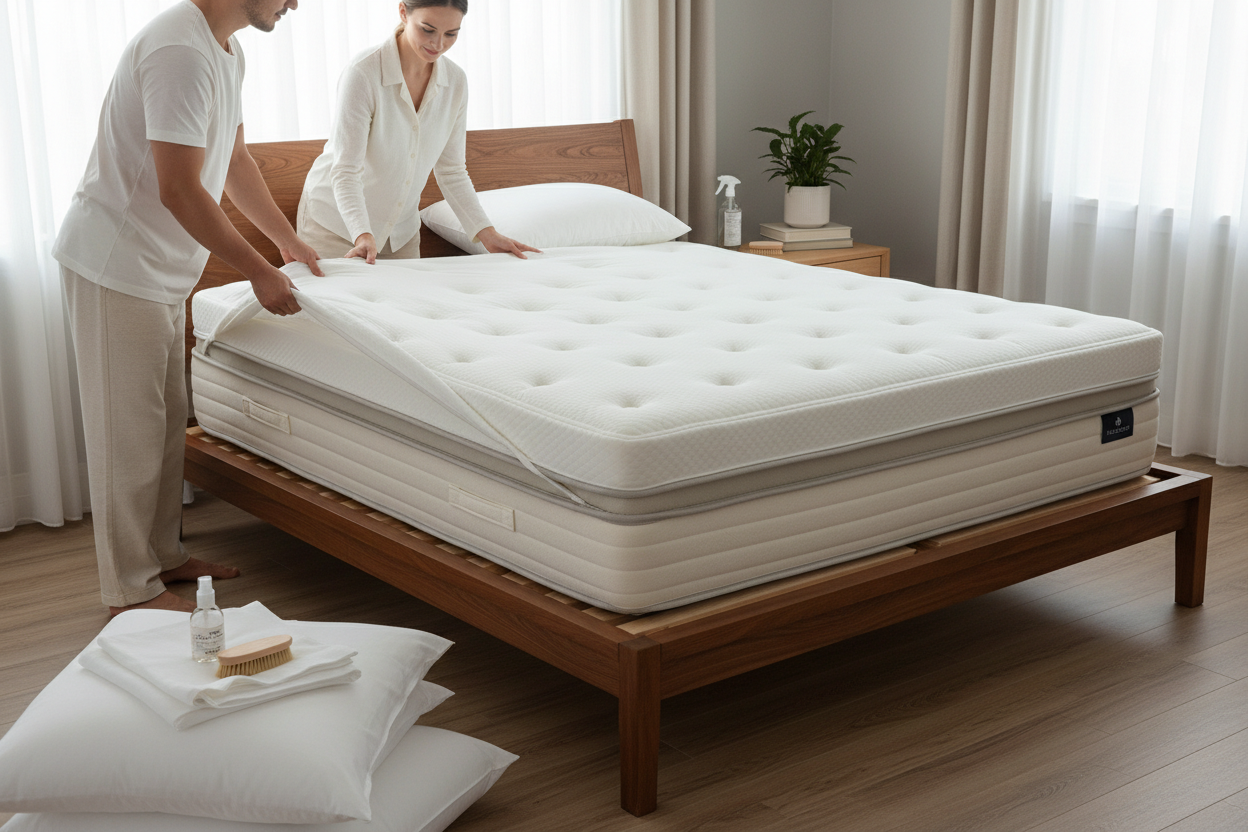
A quality mattress is designed to support your body for many years, but even the best mattress needs proper care to perform as intended. Without regular maintenance, mattresses can lose support, develop hygiene issues and compromise sleep quality long before their expected lifespan.
This guide explains how to maintain your mattress so it continues delivering comfort, spinal support and healthy sleep night after night.
Why Mattress Maintenance Matters
Your mattress supports your body for thousands of hours every year. Over time, body weight, movement and moisture place stress on internal materials. Without simple maintenance habits, this wear can lead to sagging, uneven support and discomfort.
Proper care helps:
- Maintain spinal alignment
- Prevent premature wear
- Preserve hygiene
- Extend mattress lifespan
Rotate Your Mattress Regularly
Rotating your mattress is one of the most effective ways to maintain even support.
How often to rotate:
- Every 3 months for the first year
- Every 6 months thereafter
Rotation redistributes body weight, preventing excessive compression in one area. Most modern mattresses should be rotated head-to-toe, not flipped, unless specified by the manufacturer.
Use a Supportive Bed Base
Even the best mattress cannot perform properly on an unsuitable base.
Your bed base should:
- Provide firm, even support
- Use solid slats with gaps no wider than 8–10 cm
-
Show no signs of sagging or movement
An unsupported base can cause uneven wear and reduce the effectiveness of mattresses designed for spinal support, including Chiropedic’s back care mattresses.
Protect the Mattress Surface
A breathable mattress protector plays a crucial role in maintenance.
A good protector:
- Shields against sweat, spills and stains
- Reduces dust mite exposure
- Helps maintain internal materials
Choose protectors that are waterproof yet breathable, avoiding plastic-backed designs that trap heat and moisture.
Keep Your Mattress Clean and Dry
Moisture is one of the biggest contributors to mattress deterioration.
Best practices include:
- Vacuuming the mattress surface every 1–2 months
- Spot-cleaning spills immediately with mild detergent
- Avoiding steam cleaning or soaking
- Allowing airflow by airing the mattress periodically
Good ventilation prevents mould, odours and material breakdown.
Avoid Excessive Edge Sitting
Repeated pressure on the mattress edges can weaken internal support structures.
Try to:
- Avoid sitting on the edge for long periods
- Distribute weight evenly when getting in and out of bed
- Use a chair instead of the bed when dressing
This helps preserve edge support and overall mattress integrity.
Maintain a Stable Sleep Environment
Environmental factors affect mattress performance over time.
To protect your mattress:
- Keep the bedroom well ventilated
- Avoid excessive humidity
- Maintain a comfortable temperature
These conditions help materials retain their shape and comfort properties.
Follow Manufacturer Guidelines
Always follow care instructions provided by the manufacturer, as these are designed to protect both performance and warranty coverage.
Exploring the full Chiropedic mattress collection can also help you understand specific care requirements based on mattress design and materials.
Final Thoughts
Maintaining your mattress doesn’t require effort — just consistency. Simple habits like rotating regularly, using proper support and protecting against moisture can significantly extend mattress life and preserve comfort.
A well-maintained mattress continues to support healthy posture, deeper sleep and better mornings for years to come.
FAQ
How often should I rotate my mattress?
Most mattresses should be rotated every 3 months during the first year and every 6 months after to ensure even wear.
Does rotating a mattress really prevent sagging?
Yes. Rotation redistributes body weight, reducing excessive compression in one area and helping maintain support.
Can a mattress lose support even if it looks fine?
Yes. Internal materials can break down over time without visible signs, affecting comfort and spinal alignment.
Is a mattress protector necessary?
A breathable mattress protector helps protect against moisture, allergens and stains, extending mattress lifespan.


