

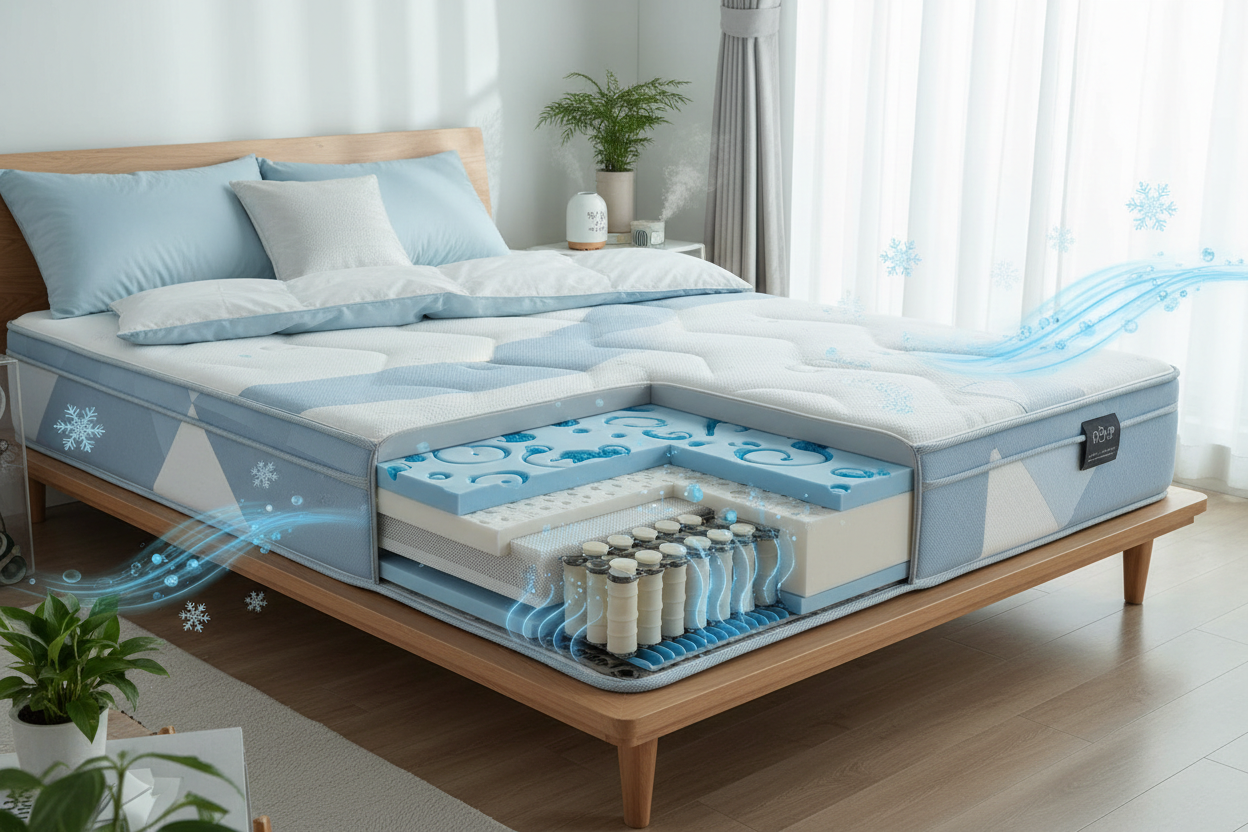
Waking up hot, sweaty or restless during the night is more than uncomfortable — it can seriously disrupt sleep quality. If you regularly overheat in bed, the issue may not be your bedding or room temperature alone. Your mattress plays a major role in how well your body regulates heat while you sleep.
This guide explains how to choose the right mattress for hot sleepers and what features genuinely help you sleep cooler through the night.
Why Sleeping Hot Disrupts Sleep
Your body temperature naturally drops as you fall asleep. If heat is trapped around your body, this cooling process is interrupted, causing frequent waking and lighter sleep stages.
Common signs you’re a hot sleeper include:
- Night sweats
- Tossing and turning
- Waking frequently without obvious reason
- Feeling overheated even in cooler rooms
A mattress that retains heat can amplify all of these issues.
Step 1: Understand How Mattresses Trap Heat
Some mattress materials absorb and hold body heat, especially dense foams with limited airflow. While these materials may feel comfortable initially, they can quickly become heat traps overnight.
Heat retention is influenced by:
- Material density
- Breathability
- Airflow through the mattress core
Choosing the right construction is essential for temperature regulation.
Step 2: Look for Breathable Mattress Materials
Breathable materials allow heat to escape rather than build up.
Features that support cooler sleep include:
- Open-cell foam structures
- Gel-infused comfort layers
- Natural fibres that promote airflow
- Pocket spring systems that allow ventilation
Chiropedic’s mattresses for hot sleepers are designed with these principles to help regulate temperature throughout the night.
Step 3: Prioritise Airflow Through the Mattress
Airflow isn’t just about the top layer — it’s about the entire mattress.
Mattresses that sleep cooler often include:
- Individually wrapped pocket springs
- Ventilated support cores
- Reduced solid foam blocks
These elements allow warm air to move away from the body instead of being trapped beneath it.
Step 4: Choose the Right Firmness for Cooling
Firmness can affect heat retention.
- Very soft mattresses allow deeper sink, which can trap heat
- Medium to medium-firm mattresses typically allow better airflow
- Excessive sink reduces ventilation around the body
Balanced support keeps the body elevated enough for heat to disperse.
Step 5: Consider Moisture and Hygiene
Sweat doesn’t just make you uncomfortable — it also affects mattress hygiene.
A mattress suited for hot sleepers should:
- Wick moisture away from the body
- Dry efficiently
- Reduce conditions that allow bacteria and odours to develop
Breathable materials contribute to a healthier sleep environment overall.
Step 6: Pair Your Mattress With the Right Base and Bedding
Even the best cooling mattress can underperform if airflow is restricted.
For best results:
- Use a slatted base with adequate spacing
- Avoid solid, non-ventilated foundations
- Choose breathable mattress protectors and sheets
Cooling is a system — every layer matters.
Step 7: Test With a Sleep Trial
Your body needs time to adjust to a cooler sleep surface.
During a sleep trial, assess:
- How often you wake during the night
- Whether night sweats reduce
- How refreshed you feel in the morning
True cooling performance reveals itself over time, not just on night one.
Where to Start
If overheating is affecting your rest, explore mattresses engineered specifically for airflow and temperature control. The Chiropedic mattress collection includes designs tailored for different sleep needs, including hot sleepers.Final Thoughts
Sleeping cooler isn’t about gimmicks — it’s about choosing materials and construction that work with your body’s natural temperature regulation. A breathable, well-designed mattress can significantly reduce overheating, helping you sleep deeper and wake feeling more refreshed.
When your body stays cool, sleep comes more naturally.


